
Introduction:
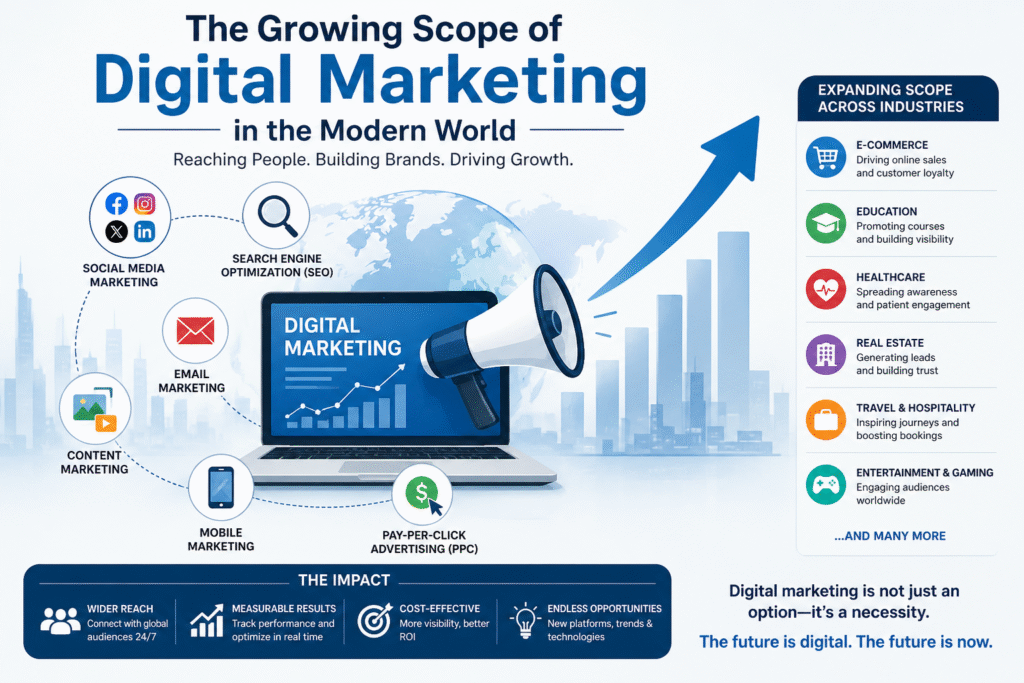
Over the past two decades, the business landscape has undergone a dramatic transformation due to the rise of digital technology. The way companies communicate with their customers, promote their products, and build their brands has shifted from traditional methods to online platforms. The Growing Scope of Digital Marketing has emerged as a powerful and essential force driving this transformation.
Today, people spend a significant amount of time on the internet—whether browsing websites, using social media, watching videos, or shopping online. This shift in consumer behavior has created a huge demand for digital marketing strategies that can effectively reach and engage audiences. As a result, The Growing Scope of Digital Marketing has expanded rapidly and continues to influence how businesses operate worldwide.
Digital marketing is no longer limited to large corporations with massive budgets. Even small businesses, freelancers, and individuals can leverage digital tools to promote their work and connect with a global audience. The Growing Scope of Digital Marketing has made marketing more accessible, creating equal opportunities and increasing competition across industries.
Another important factor driving this transformation is the increasing reliance on data. Businesses today are not just promoting products; they are studying customer behavior, preferences, and patterns to deliver more relevant experiences. This data-driven approach highlights The Growing Scope of Digital Marketing, making it more precise, measurable, and impactful compared to traditional methods.
What is Digital Marketing?
Digital marketing is the practice of promoting products, services, or brands using online channels and digital technologies. These channels include search engines, social media platforms, email, websites, and mobile applications, reflecting The Growing Scope of Digital Marketing in today’s connected world.
Unlike traditional marketing, digital marketing allows businesses to interact directly with their audience, track performance in real time, and adjust strategies quickly. This flexibility highlights The Growing Scope of Digital Marketing, making it more efficient, adaptable, and impactful for modern businesses.
It also enables two-way communication. Customers are no longer passive receivers of information; they actively engage with brands, share feedback, and influence other consumers through reviews and recommendations. This level of interaction further demonstrates The Growing Scope of Digital Marketing, helping businesses improve their offerings and build stronger, lasting relationships.
Key Elements of Digital Marketing
Digital marketing is not a single activity but a combination of various strategies that work together to achieve business goals.
1. Search Engine Optimization (SEO)
SEO refers to the process of increasing a website’s ranking on search engines by enhancing its content, organizing its structure effectively, and improving technical performance.
2. Paid Advertising (PPC)
Pay-per-click advertising allows businesses to display ads on search engines or other platforms and pay only when users click on them. This strategy helps generate quick traffic and leads.
3. Social Media Marketing
Social media platforms provide businesses with opportunities to connect with their audience, share content, and build brand identity. It also helps in customer engagement and feedback collection.
4. Content Creation and Marketing
Content marketing focuses on delivering valuable information to the audience through blogs, videos, and other formats. Good content builds trust and encourages customer loyalty.
5. Email Campaigns
Email marketing is used to communicate directly with customers. It helps in promoting offers, sharing updates, and maintaining long-term relationships.
6. Influencer and Affiliate Marketing
Businesses collaborate with influencers or partners to promote their products. This helps in reaching a wider audience and building credibility.
7. Mobile Marketing
Due to the rapid increase in smartphone usage, mobile marketing has become an essential part of modern digital strategies. It includes mobile-friendly websites, apps, and targeted messaging.
8. Data Analysis and Performance Tracking
Digital marketing relies heavily on data. Marketers analyze user behavior and campaign results to improve strategies and achieve better outcomes.
9. Marketing Automation
Automation tools are increasingly being used to manage repetitive tasks such as email campaigns, social media posting, and customer segmentation. This saves time and improves efficiency.
Scope of Digital Marketing
The scope of digital marketing is vast and continues to expand across industries and sectors.
1. Worldwide Reach
Digital platforms allow businesses to connect with customers across the globe. Even small companies can expand their reach beyond local markets.
2. Cost-Effective Strategies
Compared to traditional advertising, digital marketing requires lower investment and offers better returns. This makes it suitable for businesses of all sizes.
3. Targeted Marketing
Companies can focus their efforts on particular groups of people by considering factors like age, location, interests, and behavior, making their marketing campaigns more precise and effective.
4. Real-Time Interaction
Digital marketing enables instant communication between businesses and customers. This improves customer satisfaction and trust.
5. Measurable Performance
Companies can track results such as clicks, conversions, and engagement. This helps in making data-driven decisions.
6. Personalization
Marketing messages can be customized for individual users, making them more relevant and effective.
7. Expansion into Rural and Emerging Markets
With increasing internet penetration, digital marketing is reaching rural and semi-urban areas. This has opened new markets for businesses, especially in developing countries.
8. Integration with Technology
Digital marketing integrates with technologies like artificial intelligence, automation tools, and customer relationship management (CRM) systems, making processes more efficient and effective.
9. Support for Multiple Industries
From education and healthcare to entertainment and finance, digital marketing plays a role in almost every sector. Its adaptability makes it a universal business tool.
Career Opportunities in Digital Marketing
The growing importance of digital marketing has created numerous job opportunities. Companies are constantly looking for skilled professionals who can manage their online presence.
Popular Roles
- Digital Marketing Executive
- SEO Analyst
- Social Media Manager
- Content Creator
- Paid Ads Specialist
- Email Marketing Manager
- Data Analyst
Freelancing and Self-Employment
Many professionals choose to work independently, offering digital marketing services to clients worldwide. Others start their own agencies or online businesses.
Growth Potential
Digital marketing offers rapid career growth compared to many traditional fields. With experience and skills, individuals can move into higher roles such as marketing strategist or business consultant.
Global Opportunities
Digital marketing professionals are not restricted by location. Many companies hire remote workers, allowing individuals to work for international clients from anywhere.
Skills Needed for Digital Marketing
To succeed in digital marketing, individuals need a mix of technical and creative abilities:
- Strong communication skills
- Creativity and innovation
- Analytical thinking
- Basic technical knowledge
- Adaptability to new trends
- Problem-solving abilities
Continuous learning is essential, as digital marketing trends and tools change frequently. Certifications, online courses, and practical experience play a vital role in skill development.
Challenges in Digital Marketing
Although digital marketing provides numerous advantages, it also presents several challenges:
- High competition in the online space
- Frequent updates in algorithms
- Data privacy concerns
- Need for continuous learning
- Managing multiple platforms effectively
Additionally, maintaining customer trust in a highly competitive digital environment can be difficult. Businesses must consistently deliver value and authenticity.
Future of Digital Marketing
The future of digital marketing looks promising, with several emerging trends shaping its growth:
1. Artificial Intelligence
AI is helping automate tasks, analyze data, and improve customer experiences.
2. Voice Search
More people are using voice assistants, changing how search optimization works.
3. Video Content
Video marketing continues to grow as a popular and engaging format.
4. Automation Tools
Automation is making marketing processes faster and more efficient.
5. Immersive Technologies
Technologies like augmented and virtual reality are creating new ways for customers to interact with brands.
6. Hyper-Personalization
Future marketing strategies will focus even more on personalized experiences using advanced data analytics.
7. Privacy-Focused Marketing
With stricter data protection laws, businesses will need to adopt more transparent and ethical practices.
Digital Marketing in India
India is witnessing a fast increase in the adoption of digital technologies. With increasing internet access and smartphone usage, more businesses are moving online. This shift clearly reflects The Growing Scope of Digital Marketing and has created a strong demand for skilled professionals in this field.
Small businesses, startups, and even rural enterprises are using digital platforms to expand their reach. The Growing Scope of Digital Marketing has enabled these businesses to compete with larger companies and access wider markets. Government initiatives promoting digitalization have also contributed significantly to this growth.
The rise of regional content and local language marketing is another important trend in India, helping brands connect with diverse audiences. This localization trend further highlights The Growing Scope of Digital Marketing, and it is expected to expand even more in the coming years.
Importance of Digital Marketing for Businesses
Digital marketing is an important factor in achieving business success and growth:
- Helps build brand awareness
- Generates leads and sales
- Improves customer engagement
- Enhances brand loyalty
- Provides competitive advantage
It also enables businesses to respond quickly to market changes and customer needs, ensuring long-term sustainability.
Ethical Practices in Digital Marketing
Maintaining ethical standards is essential for long-term success. Businesses should:
- Be transparent in communication
- Protect user data
- Avoid misleading advertisements
- Respect customer privacy
Ethical marketing builds trust and strengthens brand reputation, which is crucial in a competitive environment.
Conclusion
Digital marketing has become an integral part of modern business strategy. Its scope is vast, covering multiple industries and offering countless opportunities for growth and innovation. The Growing Scope of Digital Marketing continues to shape how businesses connect with their audiences, and institutes like Digiskillz are helping individuals build the skills needed to succeed in this evolving field.
As technology continues to evolve, digital marketing will become even more advanced and influential. The Growing Scope of Digital Marketing ensures that businesses adopting new trends will thrive, while those that resist may struggle to stay competitive.
For students, professionals, and entrepreneurs, digital marketing offers a promising and future-ready career path. The Growing Scope of Digital Marketing provides endless opportunities, combining creativity, technology, and strategy in one dynamic field.
Ultimately, digital marketing is not just about selling products—it is about building meaningful connections, understanding customer needs, and delivering value consistently. By understanding The Growing Scope of Digital Marketing, individuals and businesses can position themselves for long-term success in the digital era.
Author: Hanna