
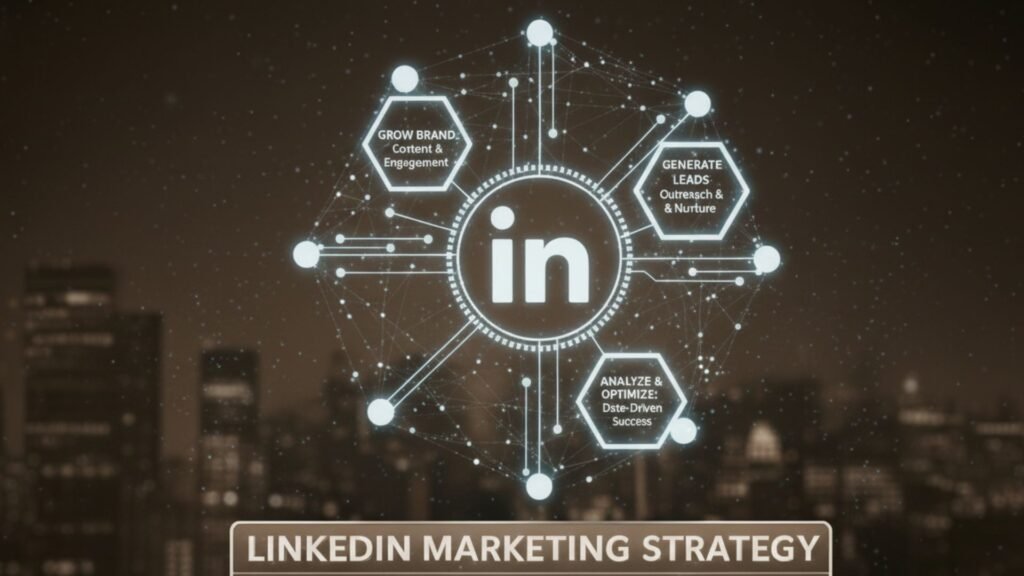
In today’s fast-paced B2B landscape, having a clear and effective LinkedIn marketing strategy is essential for any business looking to build authority, generate leads, and stay ahead of the competition. With over a billion users worldwide and a strong presence of decision-makers across industries, LinkedIn continues to be the most valuable platform for professional networking and brand growth.
A successful LinkedIn marketing strategy starts with defining your goals. Are you looking to increase brand awareness, attract new leads, recruit talent, or establish thought leadership? Your goals will shape the kind of content you create, the audience you target, and the tools you use. Once your objectives are clear, the next step is to optimize your LinkedIn Company Page. This is often the first touchpoint for potential clients or partners, so make sure it reflects your brand well—with a strong headline, compelling “About” section, professional visuals, and a clear call-to-action that drives visitors to learn more or contact you.
Understanding your audience is critical for any effective LinkedIn marketing strategy. LinkedIn offers advanced targeting options that allow you to focus on specific job titles, industries, seniority levels, company sizes, and even regions. This targeting not only helps with advertising but also ensures your content resonates with the people who matter most to your business.
Content is at the heart of every great LinkedIn marketing strategy. Posting consistently—ideally 3 to 5 times per week—keeps your brand visible and relevant. High-performing content includes thought leadership posts, behind-the-scenes stories, tips and how-tos, industry news, client success stories, and interactive content like polls or PDF carousels. Videos and personal stories also tend to generate strong engagement. A successful LinkedIn marketing strategy focuses on providing value and insight rather than just promotion—this builds trust and keeps your audience coming back.
Beyond your company page, employee advocacy can greatly amplify your reach and strengthen your overall LinkedIn marketing strategy. Encouraging your team to engage with your posts, share company updates, or even post their own content can significantly increase organic visibility—an essential part of any effective LinkedIn marketing strategy. People trust people more than logos, and LinkedIn’s algorithm tends to reward personal content with greater reach and engagement.
When you’re ready to scale, LinkedIn Ads can be a powerful addition to your LinkedIn marketing strategy. Sponsored Content is great for promoting posts, while Lead Gen Forms allow you to collect leads directly on the platform with minimal friction. Message Ads and Conversation Ads also allow for more personalized outreach. Start with a modest ad budget, test different creatives and messaging, and continuously refine based on performance metrics like click-through rates and cost-per-lead—key components of a results-driven LinkedIn marketing strategy.
Measurement is critical for any successful LinkedIn marketing strategy. Use LinkedIn’s analytics to monitor your follower growth, engagement rate, content reach, and conversion metrics. This helps you understand what’s working, what isn’t, and where to adjust. External tools like Shield or Hootsuite can also give deeper insights into performance, especially for personal profiles.
Finally, don’t underestimate the power of personal branding—especially for your leadership team. Incorporating personal posts into your LinkedIn marketing strategy—whether from your CEO, founder, or executives—humanizes your brand and opens up new levels of trust and visibility. Personal posts about leadership, challenges, company wins, or industry trends often receive much higher engagement than standard corporate posts.
Why LinkedIn Marketing Matters

Unlike other social platforms, LinkedIn is specifically built for professionals. It offers a high-trust environment where users are actively looking for business insights, industry news, and new solutions. This makes it a prime platform for B2B companies and service providers.
Key LinkedIn Stats (2025):
-
Over 1 billion members in 200+ countries
-
4 out of 5 users drive business decisions
-
Lead conversion rates are 3x higher than other ad platforms
Step 1: Define Your LinkedIn Marketing Goals
Before you post anything, get clear on your goals. What do you want to achieve?
-
Increase brand awareness
-
Generate leads and sales
-
Establish thought leadership
-
Attract top talent
-
Engage partners or investors
Each goal will shape your content and targeting strategy.
Step 2: Optimize Your LinkedIn Company Page

Your Company Page is your brand’s first impression. Make it count.
Tips for Optimization:
-
Use a professional logo and banner image
-
Write a keyword-rich “About” section that clearly explains what you do
-
Add your website, industry, and contact info
-
Pin your top post for visibility
-
Use a strong Call-to-Action (CTA) like “Visit Website” or “Learn More”
An optimized page boosts visibility and credibility when potential clients or partners search for you.
Step 3: Know Your Audience

A successful LinkedIn marketing strategy hinges on understanding who you’re speaking to.
Define Your Audience:
-
Job titles (e.g., Marketing Directors, CTOs)
-
Industries (e.g., SaaS, Finance, Healthcare)
-
Company size
-
Geographic location
-
Seniority level
Once defined, you can create tailored content and targeted ads that speak directly to their needs and pain points.
Step 4: Develop a Content Strategy

Content is the fuel for your LinkedIn growth engine. Your goal is to provide value—not just promote.
High-Performing Content Types:
-
Thought leadership posts from founders or executives
-
Educational tips and industry insights
-
Client success stories
-
Behind-the-scenes looks at your team or culture
-
PDF carousels, polls, and videos
Posting Tips:
-
Post 3–5 times per week
-
Use relevant hashtags (3–5 per post)
-
Include clear CTAs
-
Respond to all comments to boost engagement
Remember: people follow people. Leverage both your company page and employee profiles to expand your reach.
Bonus Tip: Elevate Your Executive Presence

Encourage your company’s leaders to build their personal brand on LinkedIn. Executives who post regularly humanize your brand and build trust with your audience. Whether they share personal stories, company wins, or industry insights, their voice can significantly boost visibility.
Final Thoughts
Your LinkedIn marketing strategy is more than just posting occasionally—it’s about showing up with purpose, building relationships, and delivering consistent value. Whether you’re a small business or an enterprise brand, LinkedIn gives you the tools to grow, connect, and convert.
Start small, stay consistent, and keep optimizing. Your audience—and your future customers—are already on LinkedIn. Now it’s your move.
LinkedIn Marketing Strategy: How to Build Your Brand and
Drive Results in 2025
In the evolving digital marketing landscape, LinkedIn continues to stand out as the go-to platform for professionals, thought leaders, and B2B companies. Unlike other social networks, LinkedIn offers a unique space where businesses can connect directly with decision-makers, build credibility, and create lasting relationships. But to get real results, you need more than just a company page and occasional posts—you need a clear, consistent, and goal-driven LinkedIn marketing strategy.
A good starting point is to define what you want to achieve on LinkedIn. Are you focused on generating high-quality leads, boosting brand visibility, establishing your executives as thought leaders, or perhaps attracting top talent? Defining these objectives helps you shape your messaging, content approach, and success metrics. Whether you’re a small startup or a large enterprise, having clarity on your goals ensures that your LinkedIn efforts are aligned with your broader marketing strategy.
Next, make sure your LinkedIn Company Page is fully optimized. This is often the first impression your brand makes on potential customers, partners, or job candidates. Your profile should include a professional logo, an eye-catching cover image, and a compelling “About” section that clearly communicates what your business does and who you serve. Don’t forget to include relevant keywords, as LinkedIn’s search functionality can help new prospects discover your page organically. Also, make use of features like pinned posts, a custom CTA button, and product or service highlights to direct visitors toward your next conversion step.
Understanding your audience is another critical component of a successful LinkedIn marketing strategy. LinkedIn allows you to get extremely specific when defining your target market—by job title, industry, company size, location, and even seniority level. This level of precision is especially powerful for B2B marketers, allowing you to tailor your messaging and content to the exact people who are most likely to become customers or partners.
Of course, even the best strategy will fall flat without quality content. Content is what keeps your audience engaged and your brand top-of-mind. Posting consistently—around three to five times per week—is ideal for staying visible without overwhelming your followers. Mix up your content types: share thought leadership articles, customer success stories, team highlights, tips and how-to posts, polls, videos, and even carousel-style PDF documents. Focus on providing value, not just promotion. LinkedIn users are looking for insights, inspiration, and solutions—not ads disguised as content.
Another often-overlooked element of LinkedIn marketing is employee advocacy. Your employees, especially those in leadership or client-facing roles, can play a key role in amplifying your reach. Encourage them to engage with company posts, share content within their own networks, and even post their own unique perspectives on industry trends or company culture. Content shared by individuals consistently performs better than posts from company pages alone, and it humanizes your brand in a meaningful way.
Once you’ve built a strong organic foundation, you can layer in paid advertising to reach a broader, highly targeted audience. LinkedIn Ads are incredibly powerful for B2B campaigns because of their advanced targeting capabilities. Sponsored Content allows you to promote your best-performing posts, while Lead Gen Forms help you capture leads without sending users off-platform. Other formats like Message Ads and Conversation Ads offer personalized, interactive ways to start meaningful conversations with potential customers. Start with a small test budget, analyze the results, and scale your campaigns based on performance data like click-through rates and cost-per-lead.
Measurement and optimization are key parts of any LinkedIn marketing strategy. Regularly review your analytics to track key performance indicators like reach, engagement, follower growth, and lead generation. Identify which content formats and topics perform best, and adjust your strategy accordingly. Use LinkedIn’s built-in analytics or third-party tools like Shield for deeper insights, especially if you’re also leveraging personal profiles for executive branding.
Speaking of personal branding, one of the most impactful things you can do is encourage your company’s leadership to become active on LinkedIn. When founders, CEOs, or department heads share stories, insights, or behind-the-scenes moments, it builds trust and elevates the company’s brand as a whole. Personal content often outperforms corporate messaging because it feels authentic, relatable, and human.
In conclusion, an effective LinkedIn marketing strategy in 2025 is all about clarity, consistency, and connection. It requires a blend of optimized presence, targeted content, employee involvement, and strategic use of advertising. With the right approach, LinkedIn can become one of your most powerful channels for building brand equity, generating leads, and establishing long-term credibility in your industry.
Author: Hanna